Top World News
Ex-insider predicts startling end to Trump presidency amid war talks: 'They hate his guts'
Oct 26, 2026 - World 
A former Trump administration staffer shared a startling prediction about how Donald Trump's presidency could end in a new podcast interview Sunday. Anthony Scaramucci, one of Trump's press secretaries during his first administration, predicted during a new episode of "The Daily Beast Podcast" with host Joanna Coles that Trump could be asked to leave office after the midterms. The risk of him being asked to leave will become even greater if Trump agrees to sit down with Russian President Vladimir Putin and China's Xi Jinping to discuss an end to Russia's war of aggression in Ukraine, he added. "If that meeting were to happen, then I would tell you that the Republican Party is completely dead," Scaramucci said. "We'd probably have to get a tombstone out, and you tell me the date that meeting and I will chisel into the tombstone.""Trump should be very careful with that, because he's going to push the envelope where he may be asked to leave the presidency," he continued. Scaramucci added that Democrats don't have to win the Senate for the scenario to be plausible. "People say, 'Oh, that's crazy. [It's] not crazy because the Democrats are going to take the House. Let's say they split and they go 50-50 [in the Senate]. You need 17 Republicans who have had enough of him," he said. "They hate his guts."President Donald Trump's standing among the Republican Party has sunk throughout his second term. Polling indicates that 37% of Republicans disapprove of Trump's handling of the economy. The president's strikes against Iran and his deal to buy Russian oil have also rankled the Republican base. " allowfullscreen>
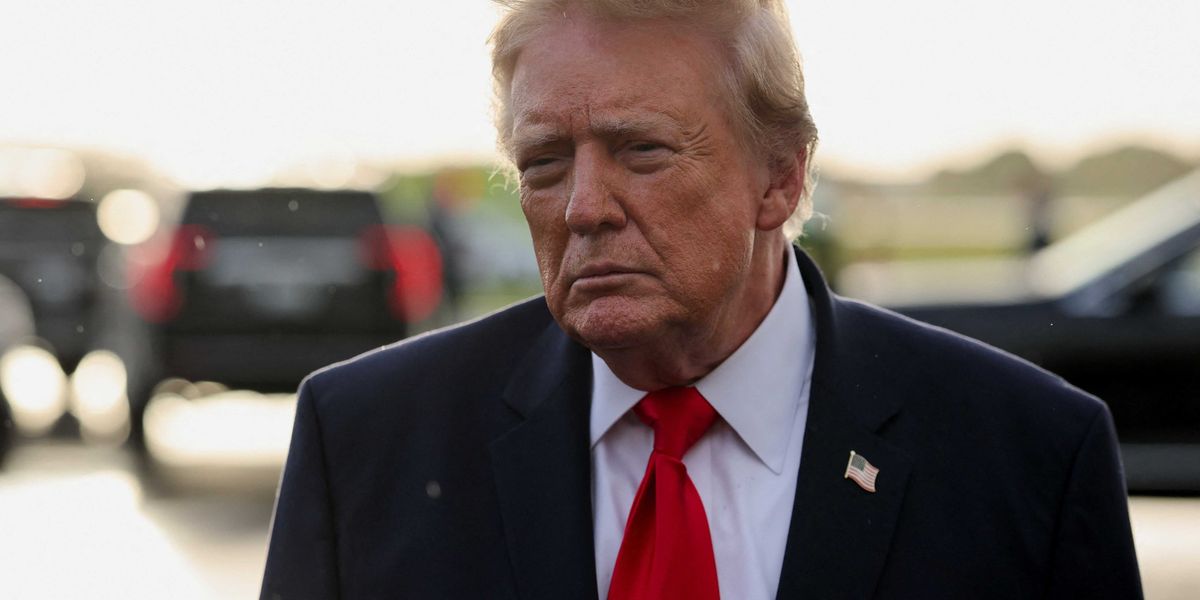
Trump facing war trap 'in its purest form' as 'most dangerous' window nears: expert
Oct 25, 2026 - World
A geopolitical expert warned Sunday that President Donald Trump is facing a trap in Iran, one that created one of the most dangerous windows in the war's timeline. Robert Pape, a political scientist who teaches at the University of Chicago, wrote in a new Substack essay that Iran's pathway to winning the war against the U.S. is by creating excruciating economic pressure on the Trump administration. Pape predicted that the Trump administration is likely to respond to such pressure with a limited ground operation in Iran after the midterms are over. This could cause a spiral of repeating escalations that drag the U.S. further into the war. "This is the Escalation Trap in its purest form," Pape wrote. Pape argued that the two months after the midterm elections in November will be the "most dangerous" part of the war. For starters, Pape noted that the lame-duck Congress will have little incentive to prevent Trump from acting on his worst impulses, especially if the Democrats trounce Republicans, as some polls have suggested. He also noted that Trump will have the fewest domestic constraints of his second term after the midterms, which could cause Trump to deal with the ongoing economic pressure in a concerning way. "Pressure on Hormuz and Gulf oil leaves Washington two choices: make the sweeping concessions an increasingly ambitious Iran demands, which carry a heavy price at home, or climb the next rung," Pape wrote. The stakes are even greater because of the looming elections in Israel, he added. There is a chance Netanyahu becomes a "caretaker" Prime Minister after the election, which could cause him to act erratically as well.
Trump admin plotting its 'most serious attempts to undermine international law': expert
Oct 25, 2026 - World
President Donald Trump's administration is plotting one of the "most serious attempts to undermine international law" in modern history, according to one expert. Stephen Zunes, a politics professor at the University of San Francisco, detailed a resolution that the Trump administration plans to submit to the United Nations Security Council regarding Morocco's annexation of the Western Sahara territory. Zunes noted that the resolution includes some significant policy proposals that, taken together, amount to "a gift to Netanyahu, Putin, and any other leader seeking to expand territory by force." "This is one of the most serious attempts to undermine international law since the founding of the United Nations," Zunes posted on X. Morocco has been attempting to annex Western Sahara since the late 1970s. The country currently controls about 80% of the territory, although international bodies don't recognize Morocco's annexation. The Trump administration's proposal would remove longstanding requirements for U.N. peacekeeping forces to oversee a referendum about Morocco's annexation, which Zunes said would negate the "right of self-determination that has long been the basis of decolonization under international law."The resolution also falsely claims that there is a growing consensus about Morocco's annexation, when Zunes noted that only two far-right governments — Israel and Colombia — have recognized the move. Zunes described the argument as a "legal fiction.""There will certainly be objections from Pakistan, China, Russia, and perhaps some other countries which could result in changes in the language before it is put to a formal vote," Zunes added. "However, with Washington’s history of running roughshod over international legal precedent and the failure of even democratic nations to consistently stand up to Trump’s bullying (particularly on what are considered less-consequential issues), it is hard to predict." "Even if the full text isn’t accepted, the Trump administration may succeed in its primary goal: to make Morocco’s autonomy proposal, which falls way short of the international definition of autonomy and would rule out the option of independence, which is required for real decolonization, recognized by the United Nations as the only basis of future negotiations," he continued.

Myanmar’s Aung San Suu Kyi ‘sounds strong’ but is isolated, son says
Oct 25, 2026 - World 
Kim Aris tells the Guardian chance to speak with detained Nobel laureate was ‘public relations’ move from military leadersMyanmar’s former democratic leader Aung San Suu Kyi appears to be in good physical and mental health but is living in near-complete isolation, her son has said after the first call with his 81-year-old mother in more than five years.“She still sounds certainly all there mentally, and physically she sounds strong,” Kim Aris said. “I don’t think she has anybody outside of the military or the police around her, so essentially she’s been held in solitary confinement from what I gather.” Continue reading...
Elon Musk admits closing Starlink ‘loophole’ in rant against ‘warmongers’: 'Burn in hell'
Oct 24, 2026 - World
Elon Musk acknowledged that SpaceX changed how Ukraine's military can use Starlink and followed it with a stark warning about the war.In a lengthy post on X Saturday, the billionaire accused Ukrainian forces of violating Starlink's terms of service by using the satellite internet system "for offensive drone strikes to kill people" before announcing, "That loophole was closed last week."Musk then made clear how much rides on the service. "Were Starlink to be turned off, the Ukrainian front line would collapse immediately," he wrote. "This is NOT a threat, it is simply a statement of fact."He argued Starlink "remains critical to the defense of Ukraine, as it is the only system that cannot be jammed or blown up, at least for now," and credited it with "preventing Russia from overrunning Ukraine in the early days of the war." "SpaceX has done more to defend Ukraine than any private company on Earth BY FAR," Musk wrote.Musk drew a distinction between Starlink, which he called "a civilian commercial service," and Starshield, "a different system" that he said is controlled by the U.S. government. "What they decide to do is up to them," he wrote.Then he turned on his critics. "I have nothing but UTTER CONTEMPT for the virtue-signaling evil warmongers who push for endless slaughter and offer no realistic solution to the conflict," Musk wrote. "May you burn in hell. End of story."The post, which racked up more than 1.5 million views, came in response to an account insisting Starlink is not a weapons system.Ukrainian activist Serhii Sternenko pushed back hard on Musk's version of events. "As someone who was inside the process at the Ministry of Defense, I can say with certainty that this is not true," he wrote, noting that "whitelists were introduced" in February.Others piled on. The account for MeidasTouch called it "a deranged post" in which Musk "openly acknowledges that SpaceX recently restricted Ukraine's ability to use Starlink." Shaun Pinner, a British veteran who fought for Ukraine and was held captive by Russian forces, replied simply, "What absolute crap."Singer Marco Foster, an executive producer at Really American who posts political clips on his popular X account, turned Musk's words around by suggesting the "warmongers" jab was "obviously referring to genocidal b— Vladimir Putin."

Oct 27, 2026 - World 
Oct 27, 2026 - World
Oct 27, 2026 - World
Oct 27, 2026 - World
Oct 27, 2026 - World
Oct 27, 2026 - World
Oct 27, 2026 - World
Oct 27, 2026 - World
Oct 27, 2026 - World
Oct 27, 2026 - World